
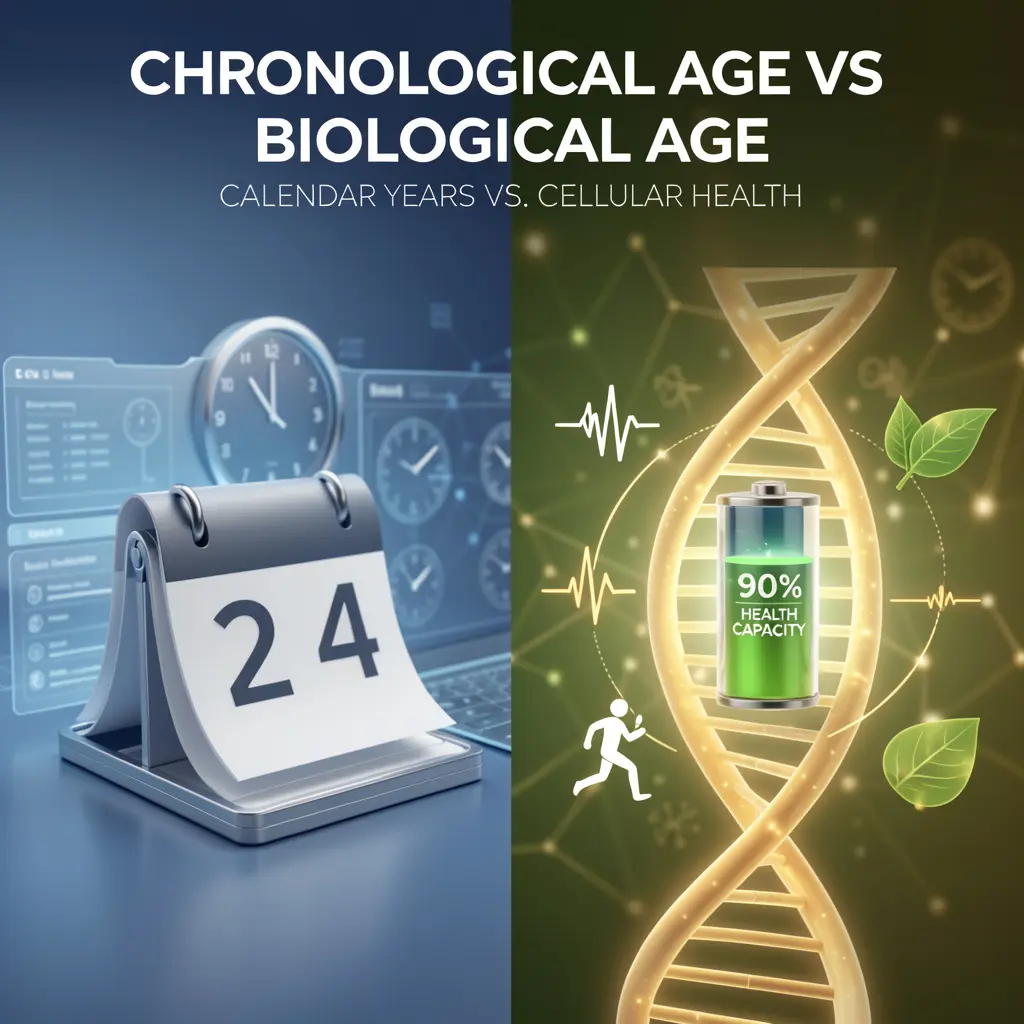
Chronological Age vs Biological Age: Older Than You Think?
When someone asks your age, you usually answer based on your date of birth, right? That number is called your chronological age. But here’s something interesting: that’s not the only way age can be described. There’s another concept called biological age. Understanding chronological age vs biological age can help you see how your body is really doing.
Let’s learn what both of these really mean and the key Chronological age vs Biological age differences.
Chronological Age Definition
Let’s revise the definition of chronological age , which is the time that has passed between your date of birth and a reference date, usually today. The chronological age is calculated by entering your DOB and is expressed in years, months, and days. Your chronological age is fixed and can’t be changed by your lifestyle, or habits. It simply reflects the actual number of years you’ve lived.
What Is Biological Age?
Biological age is a way to describe how your body is actually doing, rather than how many birthdays you’ve had, and this is your internal age. Biological age can be higher or lower depending on things like your lifestyle, what you eat, how active you are, your sleep, and even stress. Biological age gives you an idea of how well your body is and It is measured by some biomarkers and is influenced by your habits and lifestyle.
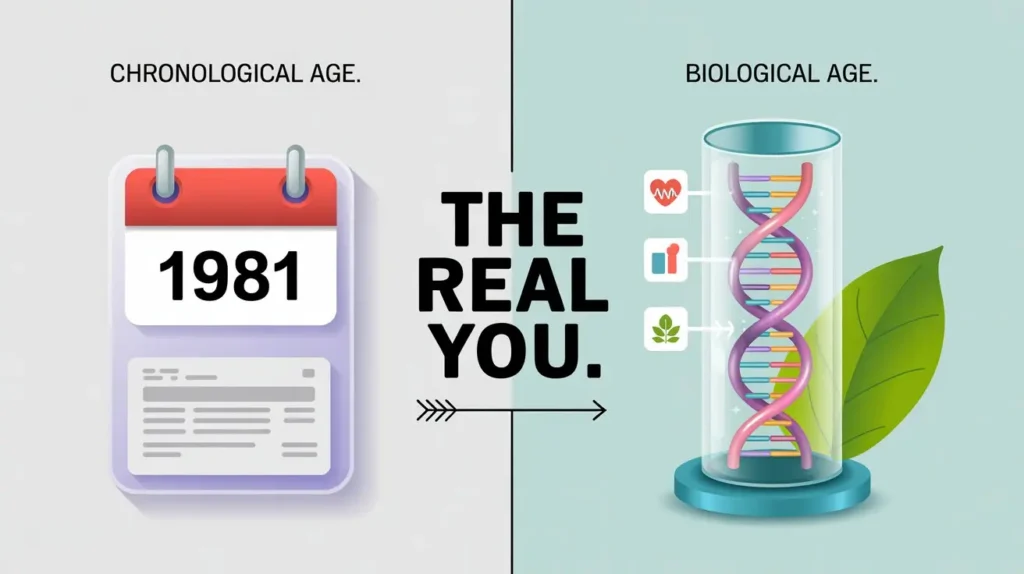
Chronological Age vs Biological Age | The Key Differences
Chronological age and biological age may sound similar, but they measure completely different things. One is based on your birth date, the other shows how your body is actually functioning internally. The table below shows brief chronological age vs biological age differences, how both ages are calculated, where they are used, and whether they can change over time.
| Feature | Chronological Age | Biological Age |
|---|---|---|
| How it’s Calculated | From the date of birth | Measured by biomarkers |
| What it Represents | Age in numbers | Body’s internal age |
| Can it Change? | NO | YES |
| What it’s Used For | Legal records, school placement, official purposes | Understanding your overall health and body condition |
While biological age requires testing, chronological age is a simple calculation of time. Try our chronological age finder tool to see your age down to the day.
Chronological age vs Biological age: Why People Confuse them
Ever heard this phrase: “The calendar says one thing, but the knees say another.” It is true in chronological age vs biological age cases, because a lot of people get confused as they both seems similar and measure the same thing i.e. age.
Chronological age, as we know, is the number or calendar age measured in years, months, and days. Biological age, on the other hand, tells the age of your body’s internal organs, like how well they are performing their functions. It can change depending on dietary changes, habits, and stress.
Reasons for Confusion:
Below is the few reasons as why people confuse in chronological age vs biological age.
- We use one as a shortcut for the other: For generations, humans have relied on birth dates as a best guess for health. If someone is 70, we automatically assume they are older.
- We used to think they were the same: In the past, we assumed that as the numbers went up, the body fell apart at the same rate. Now that we know a 60-year-old can have the heart of a 40-year-old, that rule doesn’t work anymore.
- Language limits: Since both use the word “age,” our brains tend to see them as the same thing.
What Factors Are Linked to Biological Age?
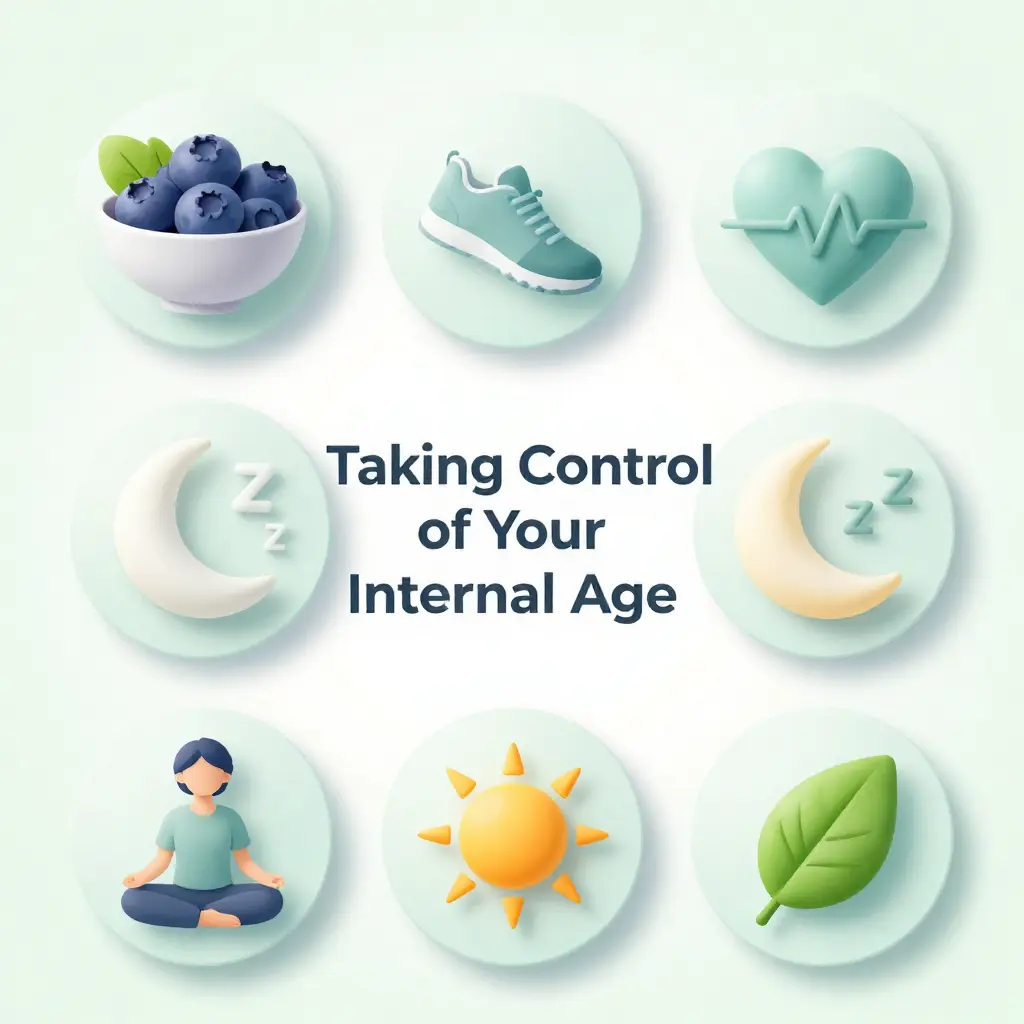
Biological age is affected by several ways, from genetics to lifestyle, while lifestyle often plays the larger role.
Genetics:
Some people are born with a slower metabolism. You might know someone who smokes and eats junk food but still lives to be 90 years old. They have genetic markers that help their bodies repair damage more effectively than the other person.
Lifestyle Habits:
- Diet: Research links diets high in processed food and sugar with higher inflammation, while diets richer in berries, leafy green vegetables, nuts, and fiber are studied for the opposite pattern.
- Physical Activity: Studies associate regular exercise with heart health, and people who are active often show a lower biological age than their calendar age..
- Sleep Patterns: Sleep is described in research as the body’s repair window. Without proper rest, the body has less time to fix daily damage.
- Stress Levels: High stress releases cortisol, which research links to organ wear when it stays elevated for too long.
- Environment: Breathing polluted air makes the body work harder to filter out toxins. And while the sun provides Vitamin D, too much UV exposure is linked to skin damage that can make a person appear older.
How Biological Age Is Estimated
This part is now getting technical, but we felt to make you understand the difference between the chronological age vs biological age clearly.
Biological age is something you can’t see on the calendar, and because it depends on your internal organs, to measure, scientists use biomarkers, that shows how well your body is holding up. Since there isn’t one single “calculator,” usually a combination of a few different methods is observed:
Advanced lab-based Methods
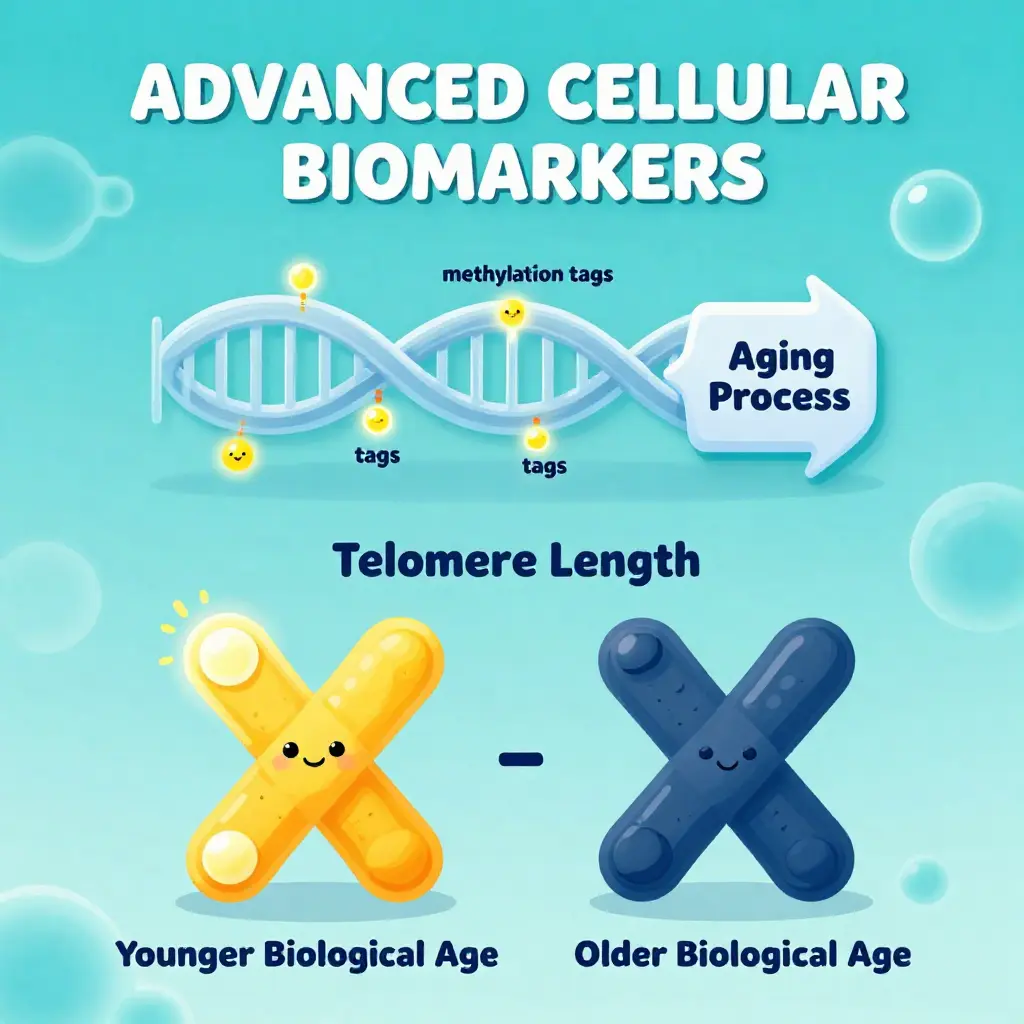
- The Epigenetic Clock (DNA Testing): This is the gold standard. Scientists look at your DNA to check for methylation. Think of your DNA as an instruction manual, as you age, the body adds tiny chemical tags to the pages. Studying these tags helps researchers guess your biological age very accurately.
- Telomere Length: These are the protective caps at the ends of your chromosomes. Every time a cell divides, they get shorter. Long telomeres usually indicate a younger biological age.
Measuring telomere length gives scientists a peek into how much your body has aged at the cellular level.
Glycan Analysis:
While DNA looks at your instruction manual, Glycan analysis looks at your immune system. Glycans are sugar molecules that coat your proteins, as you age or experience age-related inflammation. These sugars change shape.
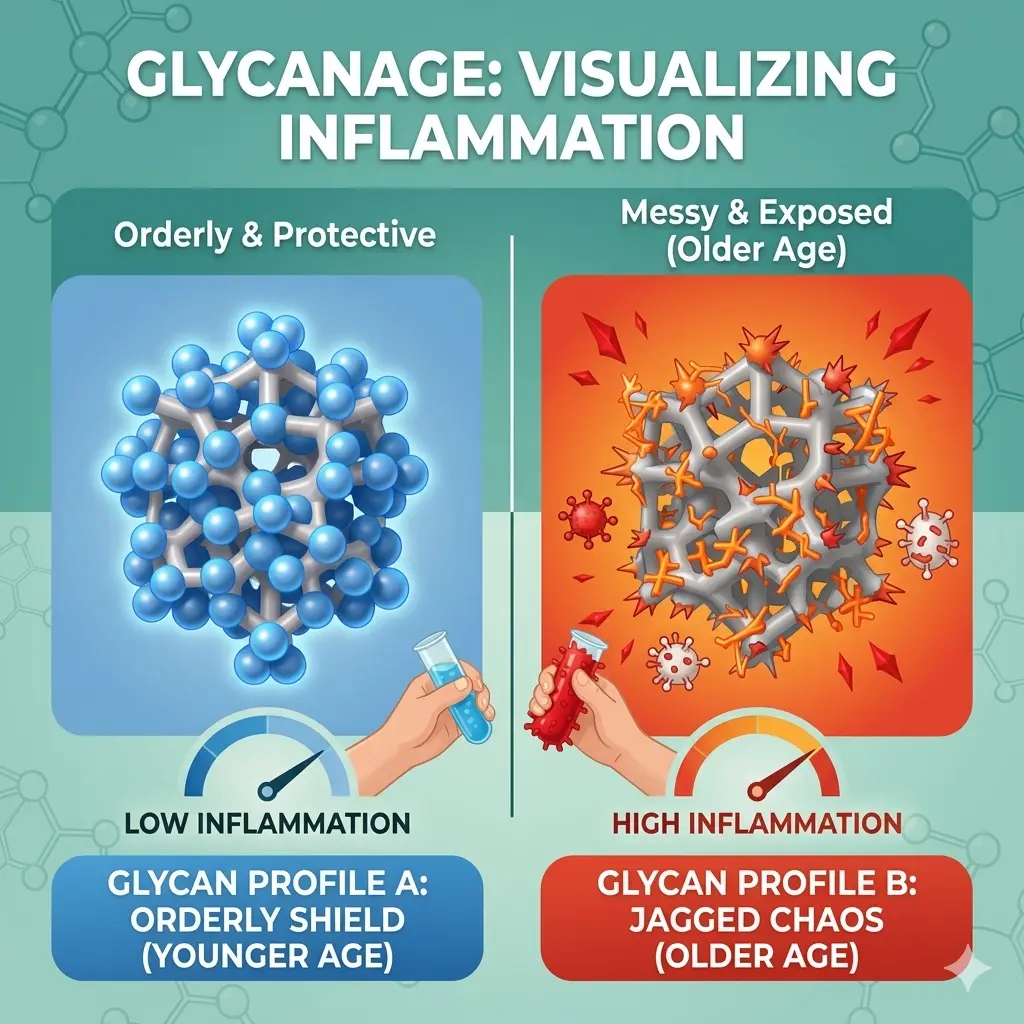
By analysing them, researchers can estimate your Glycan Age, giving you a clear look at the inflammation levels driving your biological age.
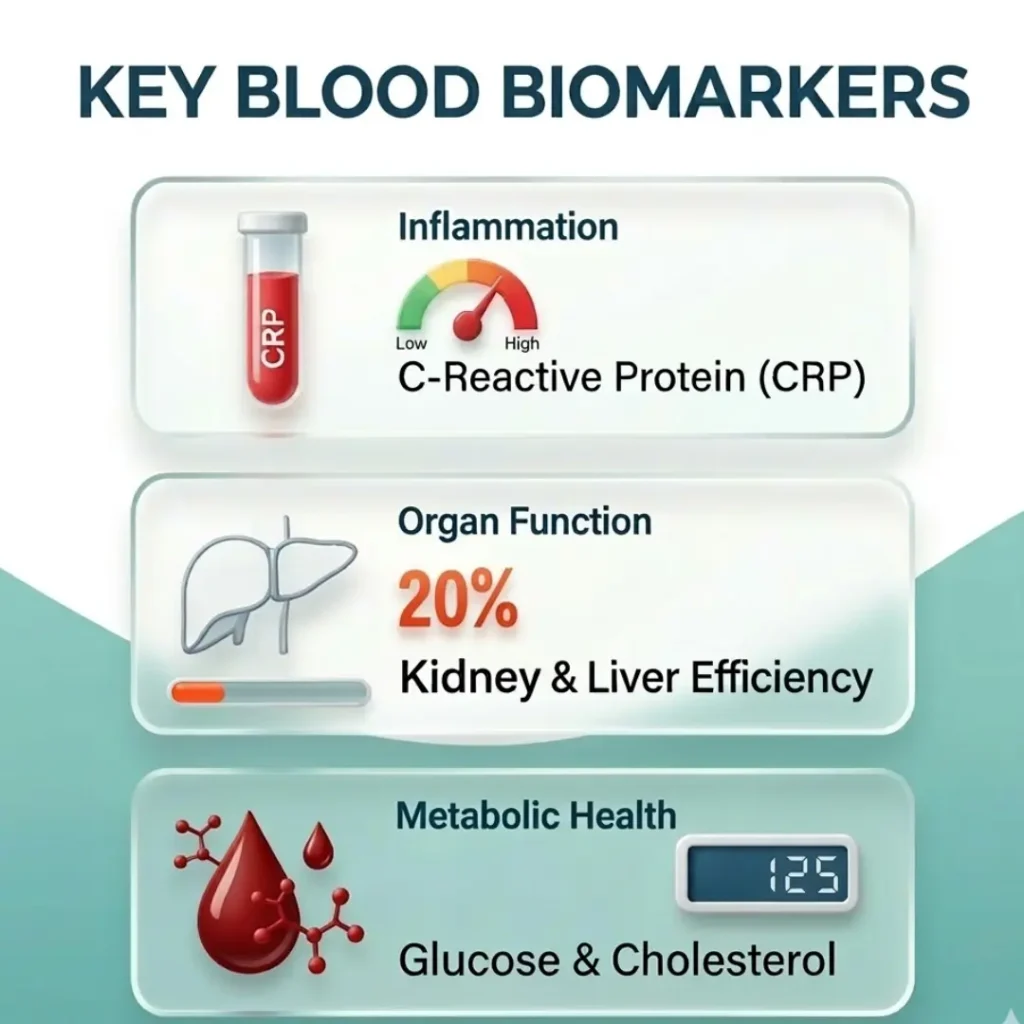
Blood Biomarkers:
Doctors can look at specific markers that change as we age:
- Inflammation levels: High levels of C-reactive protein (CRP) usually mean your body is under stress.
- Organ function: How well your kidneys and liver are filtering waste.
- Blood sugar and cholesterol: These can indicate how your body is aging internally.
Physical Indicators:
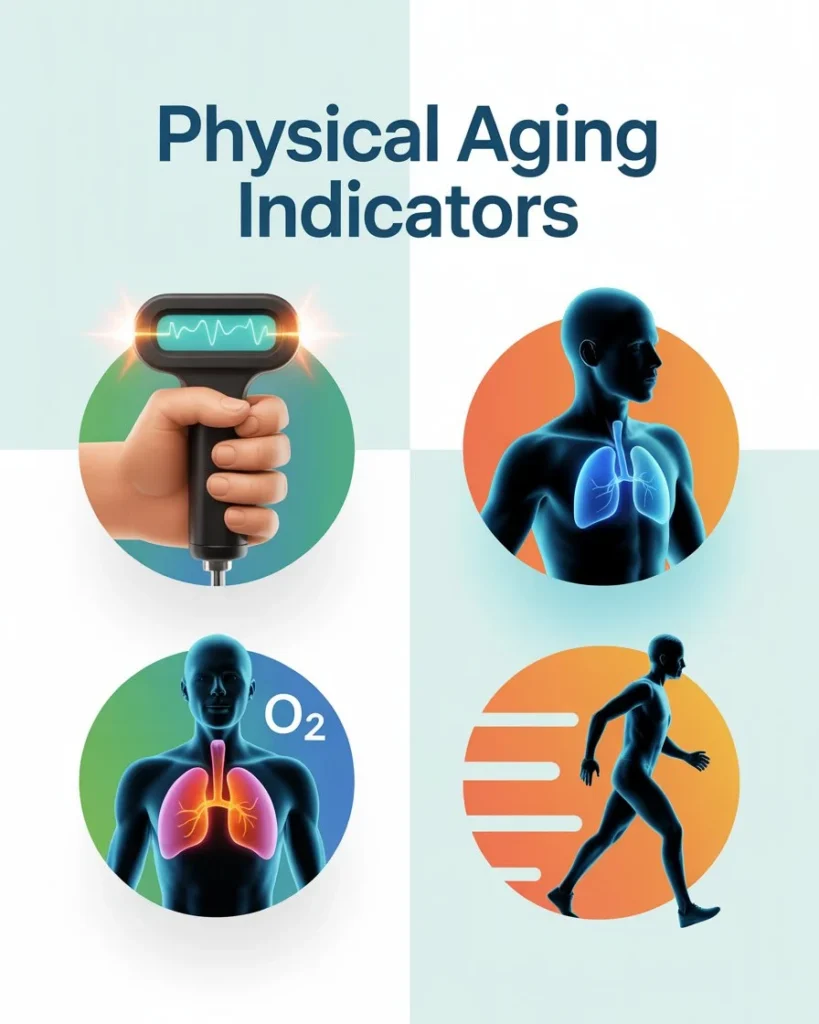
Sometimes the simplest way to calculate biological age is to see what the body can actually do. While blood tests tell us what’s happening inside our cells, physical tests tell us how our body is actually performing. Common tests include:
- Grip Strength: There is a strong link between how hard you can squeeze a handle and your overall muscle and heart health.It shows how hard one can squeeze a handle
- VO2 Max: This measures how much oxygen your body can use during exercise. A high VO2 max is a huge sign of a “young” heart and lungs.
- Walking Speed: Believe it or not, how fast you naturally walk is a very accurate predictor of biological longevity.
AI & Aging Clocks:
Recently, scientists have started using Artificial Intelligence to look at thousands of data points at once, like your facial wrinkles, your blood work, and even your eye scans, to give you a single Biological Age number.
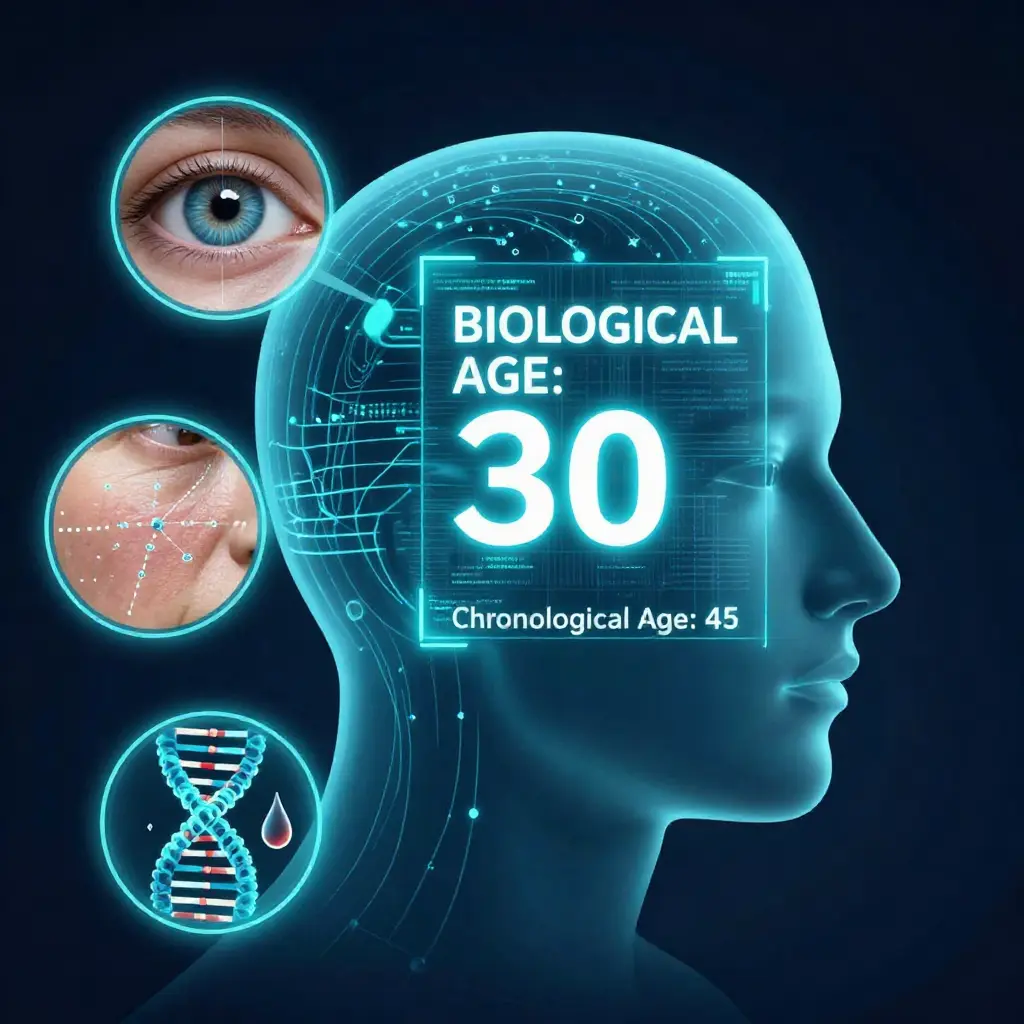
In short, If your tests show that your heart, lungs, and DNA look like a 30-year-old’s, your biological age is 30, even if your birth certificate says you’re 45.
Why Biological Age Matters?
You might be thinking, If the calendar is going to keep moving regardless, why does it even matter? It’s a fair question. The reason you should care is that while you can’t argue with your birth certificate, you can influence how your body handles the passing years.
Understanding your biological age is less about the number and more about getting a clear look at how your daily habits are actually landing.
It’s worth remembering that this isn’t a medical diagnosis or a scary test result. It reads more like a wellness snapshot. Biological age is often described as a way to understand the body rather than a test to act on without professional input.
It is talked about as an awareness tool rather than a medical test. It helps explain why two people of the same chronological age can experience aging very differently, where one might feel worn out while the other feels more energetic.
In short, biological age is interesting because it reflects how the body is truly holding up, rather than just how many birthdays have passed.
What Research Links to a Healthy Biological Age
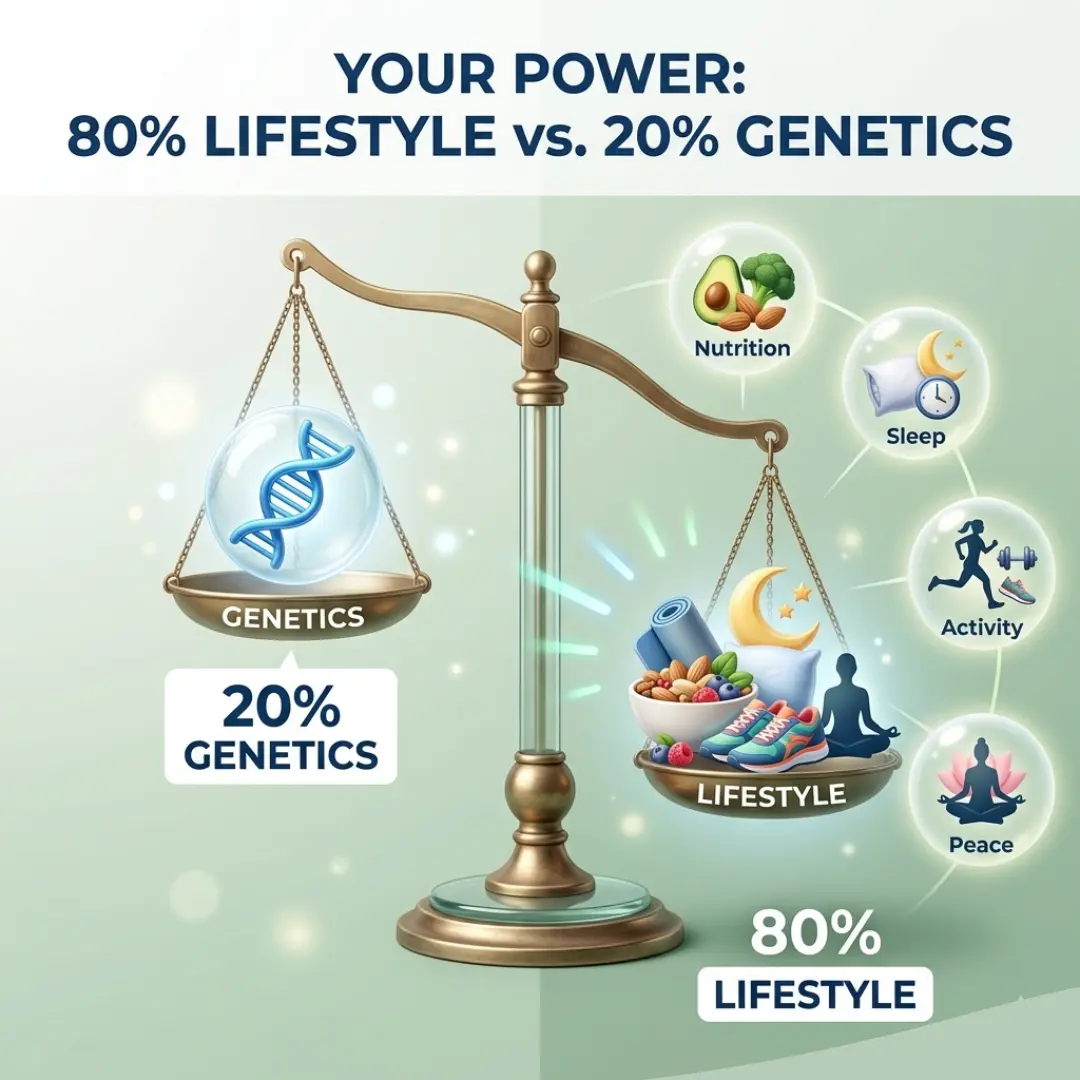
According to Dr. Nichola Conlon, it is estimated that around 80% of biological age is associated with lifestyle and 20% with genetics. Here is what research has connected to biological age. This is background information, not guidance, and any changes to diet or activity are a conversation for a healthcare professional.
- Balanced nutrition: Studies associate nutrient-dense diets with metabolic health, and diets high in nuts, seeds, and fiber are researched more favourably than those high in processed food.
- Exercise: Aerobic activity and training are linked in research with lower inflammation, and studies also note that extremes can push hormones the other way, which is why moderation comes up often.
- Better Sleep: Sleep is described as the body’s repair window, and research connects poor rest with damage carrying over day to day.
- Stress Management: Chronic stress is linked with elevated cortisol, and practices such as meditation are studied for their association with lower cortisol levels.
Disclaimer:
This content is for informational and educational purposes only and is not intended as medical advice. Biological age estimates are wellness indicators and should not be used to diagnose or treat any health condition. Always consult a qualified healthcare professional before making any changes to your diet, exercise, or lifestyle.
Bottom Line
Knowing the differences between chronological age vs biological age is important to manage your health and live a long life. Chronological age is simply the passage of time you have spent on this planet, while biological age is your body’s internal health age. Chronological age is fixed and is not impacted by our lifestyle; it is calculated by your date of birth. On the other hand, biological age is measured by your internal organs’ functioning.
Researchers have reported that daily choices and lifestyle habits are associated with biological age. Studies have connected factors like diet, sleep, stress, and moderate exercise with biological age, and in some cases with a lower reading. For anything you want to act on, a healthcare professional is the right person to guide you.
Frequently Asked Questions
References & Further Reading
- Expert Insights: Dr. Nichola Conlon’s research on biological age and the 80/20 rule, as featured in Saga Magazine: How to Reduce Your Biological Age.
- DNA Methylation: Learn more about how scientists measure “epigenetic clocks” from the National Institutes of Health (NIH).
- Telomeres and Health: Explore research on cellular aging caps via PubMed Central.
- Physical Biomarkers: Studies on the link between grip strength and longevity as published in the British Journal of Sports Medicine.
- Biological Age Testing: Information regarding Glycan analysis and biological markers as discussed by the GlycanAge research team.