
Chronological Age: Meaning, Importance, Uses & Example
Ever wondered why two people born in the same year can have completely different experiences, like starting school, getting a driving license, or even planning a health check up? That’s where chronological age comes in, which is the exact time since your date of birth.
Calculating it can get confusing with leap years, different time zones, or how different cultures count age, like in East Asia and the Western world. Let’s take a look at what is chronological age, why it is important, and what myths you have had related to it.
What Is Chronological Age?
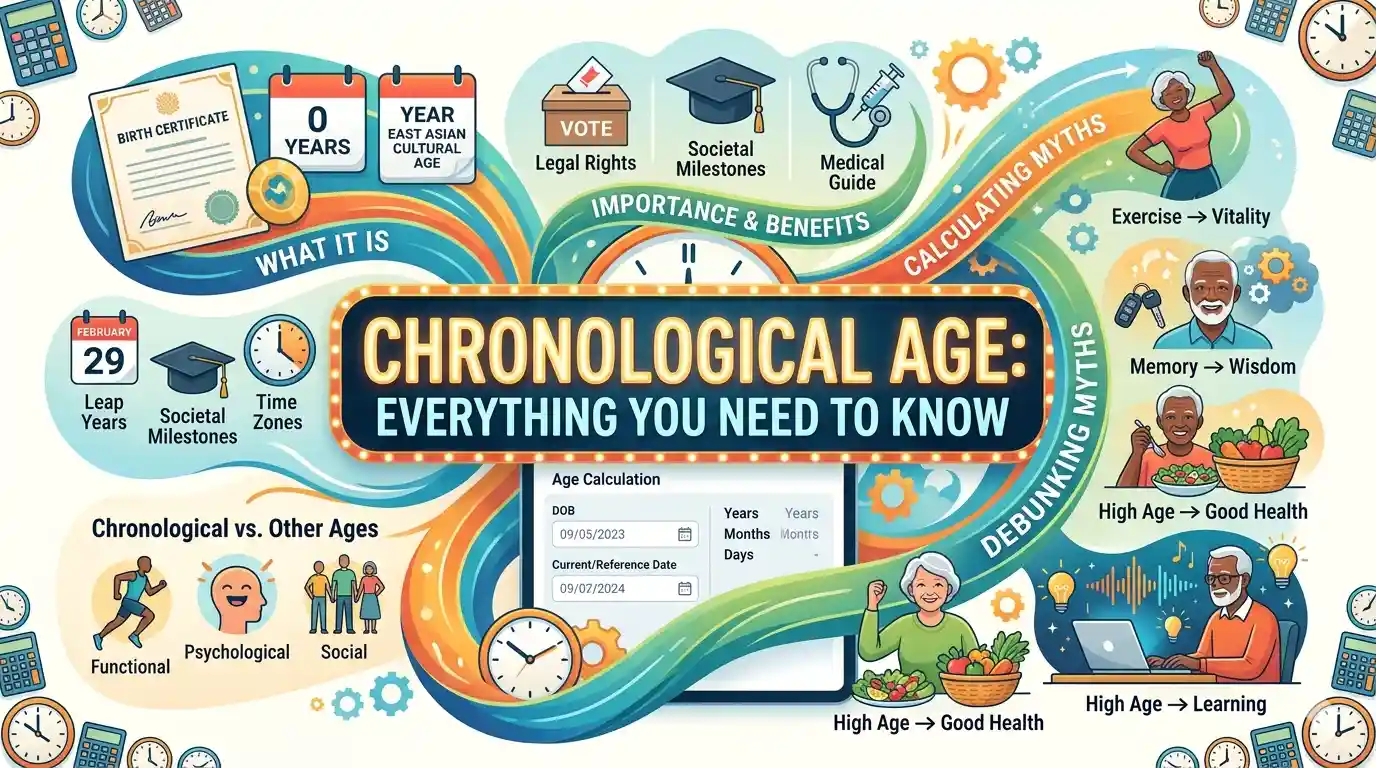
Chronological age is simply defined as the time that has passed since your birth, which is measured in years, months, and days. It’s a fixed number; your lifestyle, habits, or how active you are won’t change it. But chrono age is not just a number, it helps parents track a baby’s growth, check when kids start school, and legal procedures like driving, voting, or retirement. It is useful for health professionals to schedule health check ups or in medical assessments where age specific growth evaluation is required.
You can quickly find your exact age using our Chronological Age Calculator, whether you want it in years, months, or even days. It’s a simple way to know exactly how long you’ve been on this planet and why that number matters in everyday life. Our calculator also gives you the age result in total weeks, days and even in hours, and days remaining for your next birth day.
Cultural difference in Chronological Age
You might think age is universal and every country follows Gregorian calendar, but that’s not always the case. Different cultures have different ways of counting age, which can make a big difference when it comes to birthdays, legal documents, and even school enrolment. Let’s take a closer look at how age is counted around the world.
The Age in the Western World
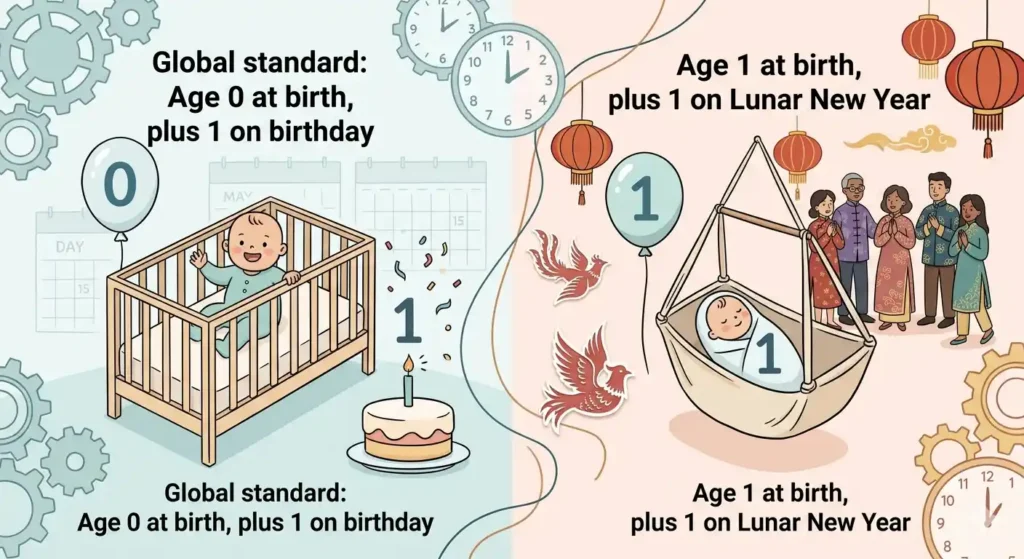
In most of the Western countries and in US and Australia, when a baby is born, his/her age is counted as 0 years old, and their age increases every year on their birthdays.
This Gregorian age system is widely used around the world for everything from school grades placement to legal rights. The actual age is always measured from your exact date of birth.
The Age System in East Asia
You might find it interesting, but in some East Asian cultures, babies are considered 1 year old at birth, and everyone adds a year on the Lunar New Year rather than their birthday.
This means a new born can be 1 year old from the day of birth. This system is deeply rooted in tradition and can sometimes be confusing when comparing ages internationally.
Why Chronological Age Number is the Gold Standard
Your Calendar age might seem like just a number, but it’s actually very important. It’s called the gold standard because it’s the most reliable way to know how long someone has lived on Earth. Since it is calculated from DOB, it only increases every year and here’s why it matters:
- Legal Rights: Your exact age decides when you are eligible to vote, get a driving license, or retire.
- Societal Milestones: It tells us when to start school, graduate, or reach adulthood.
- Medical Benchmarks: Doctors use it to schedule vaccines, health check ups, and tests at the right time.
In short, this age is the official number that guides important decisions in daily life.
Key Benefits of Using Chronological Age
You may wonder as why your exact age in months and days is important these days, if it is just a calendar age and we measure it from our date of birth. Here we listed down few of the benefits of determining your age chronologically;
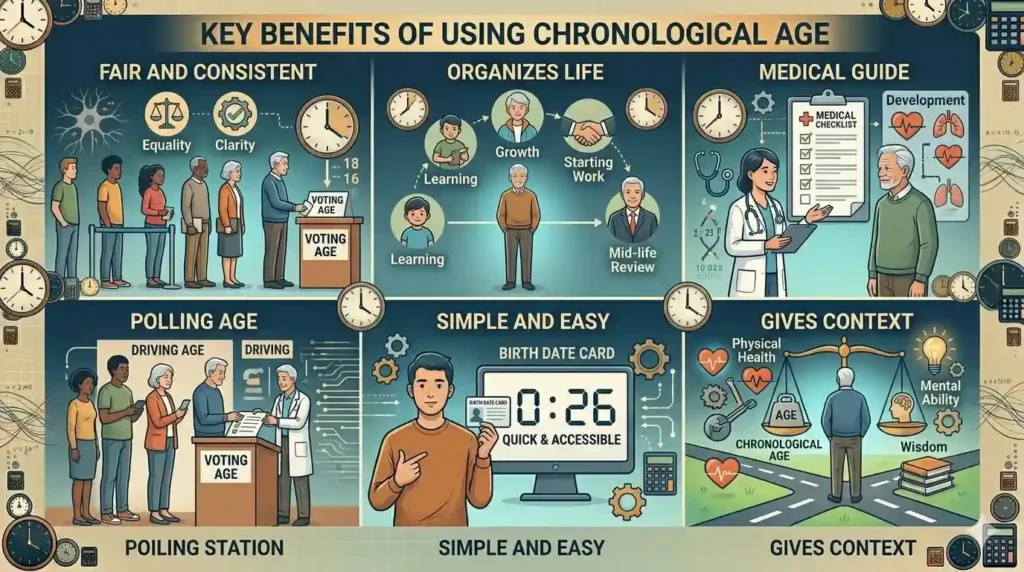
Fair & Consistent
Determining your age is important because it makes rules like voting age or driving age clear and equal for everyone.
Organizes Life
Knowing your age helps you understand typical stages for learning, growth, and starting work.
Medical Guide
Professionals may use it to decide when to start health checkups or track general development stages.
Simple & Easy
It is based on your birth date, no special tests are needed, making it quick and accessible.
Gives Context
It helps you compare your age with your health or abilities, even if it’s not the full picture.
Problems Faced in Age Calculation
Calculating your age counted from your date of birth is simple, but there are a few tricky situations that can make it a little more complicated. Here are some common challenges if calculating the chrono age manually;
The Leap Year Issue
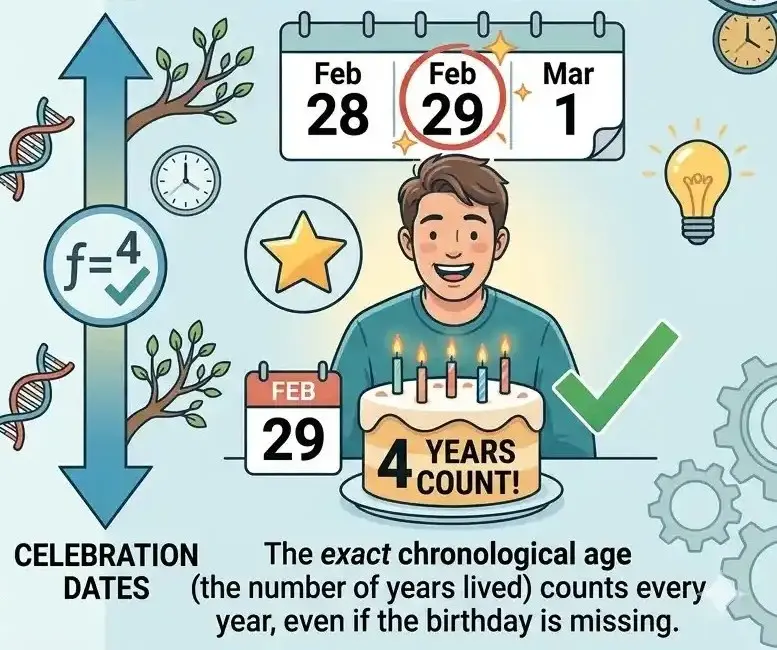
If you were born on February 29, your birthday only comes once in 4 years. This difference in days of February makes the calculation confusing for both birthdays and legal purposes. Usually, people celebrate on February 28 or March 1 in non-leap years, but your exact age still counts every year.
Time Zone Differences
Sometimes, the exact moment you’re born matters, especially if it’s close to midnight or in a different time zone. A baby born late at night in one country might have a slightly different age in terms of days if measured from another time zone. While this usually makes only a small difference, it’s important in precise calculations, legal documents, or international records.

Using the Online Chronological Age Calculator
An online chronological age calculator makes it easy to find your age in years, months, and days, whether you need a quick answer or a more detailed breakdown, the tool gives results instantly.
You can use it in different ways depending on your needs:
Calculating Chronological Age in Years
Sometimes, you only need a simple age results and that age in years gives a quick and clear view of how old a person is. For example, someone who says that I am 17 years old is old enough for things like driving license in USA, sports categories, or legal requirements.
Calculating Age in Months & Days
In some cases, age needs to be more than just a number. Calculating age in months and days helps track child growth, check eligibility for school admissions, and developmental milestones. For example, a child may be 6 years and 2 months old, and that extra detail can matter for school admission.
Chronological Age Calculator for Babies
Small differences in age are important if you are calculating actual and exact age for babies. Parents and doctors often need the exact age in months and days to check and track growth and development properly. The age calculator tool helps provide accurate results that align with common practices used in schools and clinics. And if you are working with standardized assessments, our test age ranges chart shows the exact age each test is built for.
Note: This tool does not calculate corrected or gestational age. For medical use, always follow professional guidelines.
Your Calendar Age In Future | How old will I be in?
Sometimes few of us want to find our age for future years just for fun or maybe for any legal work, with the calculator you can find your age on any date, not only in the past, today, but also for future dates.
For example:
- How old were you on a specific date in the past?
- How old will you be in 2030?
Just enter your date of birth and the reference date, and the calculator will handle the rest.
Fun Facts & Chronological Aging Myths
Age is often misunderstood, and many common beliefs about aging are not completely true. Let’s look at some popular myths and the reality behind them:

High chronological age always means poor health
You have heard, Age is just a number, and it’s true. Many older adults stay healthy and active with a balanced lifestyle, the diet they have, and most importantly, regular check ups. By following this, our elders can have a health far better than that of those of us who rely on junk food.

You lose your memory as your age increases
We can all relate that men are more prone to forgetting where they put their belongings, especially car keys, but it doesn’t mean that they are losing memory because they are aging. While the speed may be affected, the wisdom, knowledge, skills, and experience increase with age.
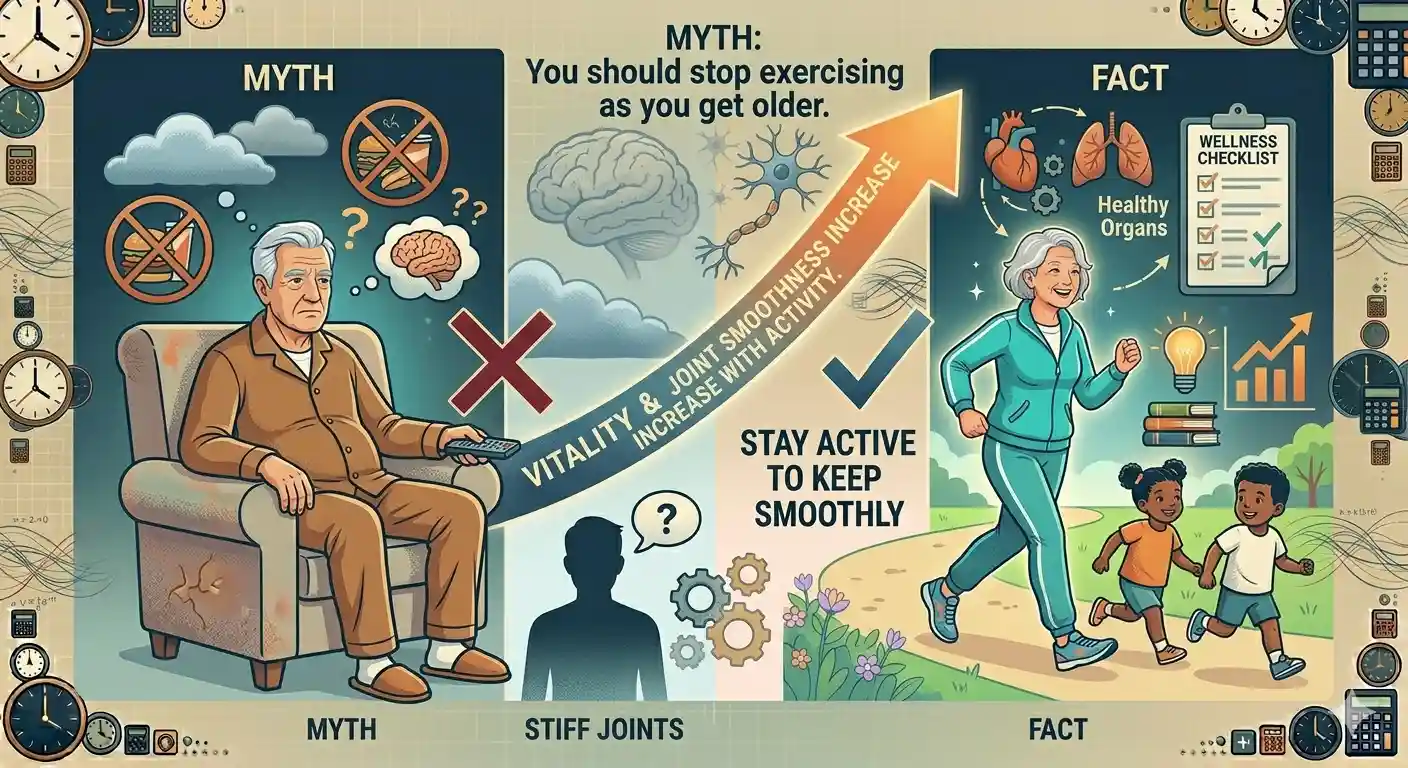
You should stop exercising as you get older
While Shakira and Beyoncé are still hip-hop dancing at their age, those of us who sit all day might feel vertigo just shaking our heads, right? That’s because we believe in the myth that exercise is only for Gen Z and Gen Alpha. In reality, staying still is what makes you feel old and sluggish. Whether it’s a brisk walk or chasing your grandkids, staying active keeps your joints moving smoothly.

Older age means you can’t learn new skills
We might get irritated when our fathers watch YouTube videos all day on high volume, but they aren’t just passing the time; they are learning. Because of their life experiences, our elders actually understand new concepts better than the post-COVID generations, who just Google for quick answers.
More Than Just Years | Other Ways To Measure Age
After reading this information, we are sure that you completely understood what is chronological age and its use cases. For revision, it shows how many years you’ve been alive, but it doesn’t always match your body’s or mind health. Chronological age is one of several ways to understand human age.
You can read different kind of ages like biological age, mental age, social, and functional age in our detailed guide on Types of Ages Explained.
Reverse Chronological Age – A New Concept
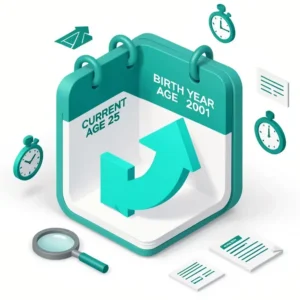
Sometimes you may know your current age but not remember the exact birth year. A reverse chronological age calculator helps you estimate your birth year by entering your current age.
This can be useful for quick eligibility checks, school forms, or general planning. Our tool mainly calculates age from date of birth, but reverse age calculation is helpful when only age details are available.
Frequently Asked Questions
Conclusion:
Chronological age is more than just your birthdays; it’s the number that affects your life, from school admissions to getting a driving license, voting eligibility, and even health check ups. No matter where you are in the world, whether following the Western Gregorian system or traditions in East Asia, your age always comes back to your date of birth.
While it’s the number, it doesn’t affect your health, skills, or mind, so whether you’re checking your age for fun or for something important, using a Chronological Age Calculator makes it quick, accurate, and stress-free. In simple words, know your age, understand its role, but don’t let it limit what you can do.
References & Further Reading:
- Understanding Chronological Age: A comprehensive educational lesson on the definition and practical application of age tracking in human development, via study.com
- 10 Myths About Aging: Detailed research by the National Institute on Aging (NIA) debunking myths about memory, learning, and physical decline.
- The East Asian Age System: A comprehensive breakdown of the traditional system where newborns are one year old at birth, provided by the Library of Congress.